
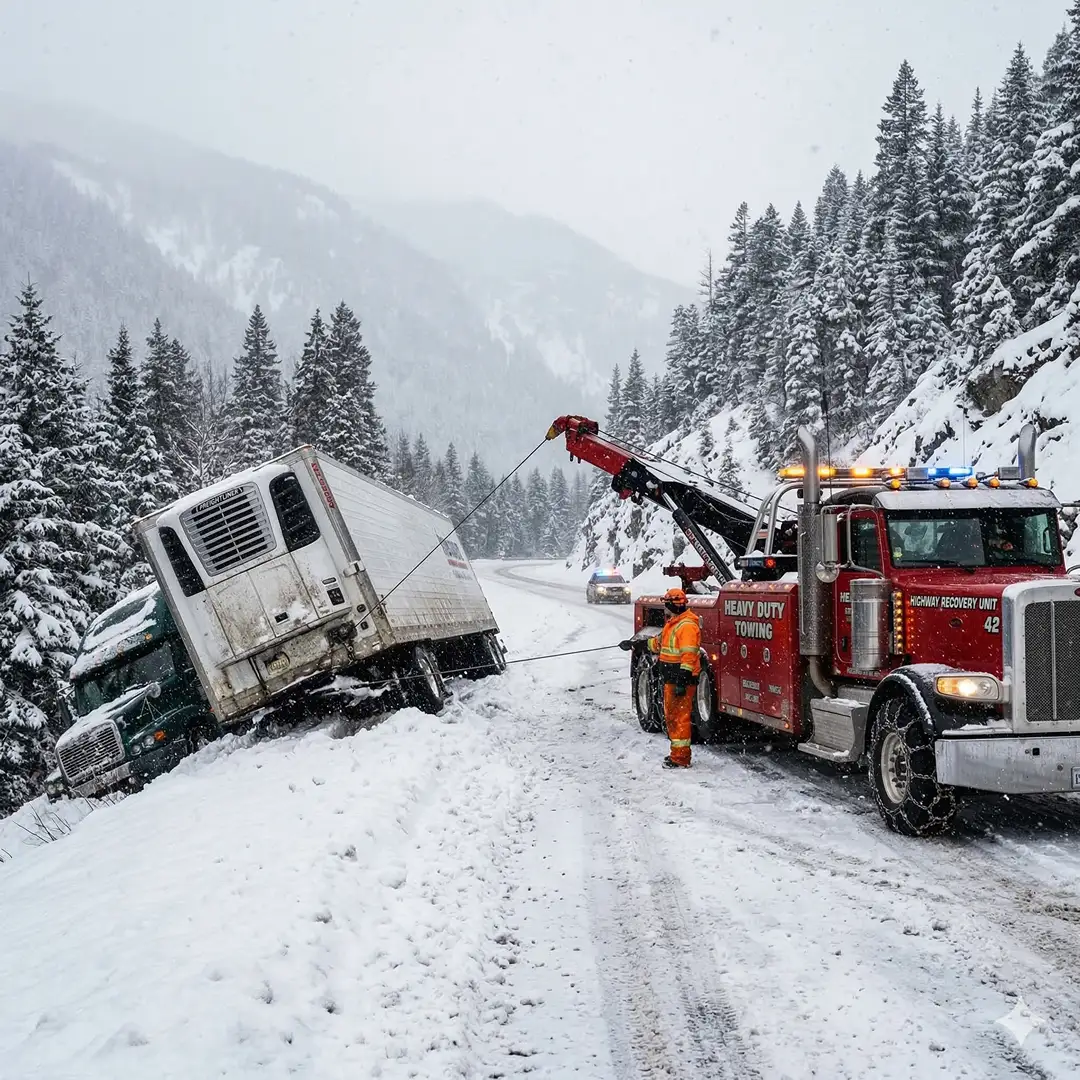
Driving for work is a high-stakes responsibility, but when the forecast turns sour, the danger spikes significantly. Recent data shows that weather plays a role in roughly 12% of all vehicle crashes, accounting for nearly 745,000 accidents annually. While many drivers fear the snow, it is actually rain and mist that account for over 77% of all weather-related crashes.
Whether it’s freezing rain in the winter or a sudden summer downpour, adverse conditions like fog, smoke, and flooding can strike at any time. To keep your fleet moving safely, it is essential to move beyond “hope for the best” and implement a proactive risk control strategy. Here is your guide to building an emergency plan that protects your drivers and your bottom line.
Step 1: Prepare the Vehicle
Safety starts before the key even enters the ignition. A well-prepared vehicle is your driver’s first line of defense.
- Follow Maintenance Schedules: Strictly adhere to manufacturer-recommended maintenance to ensure the vehicle is mechanically sound.
- Conduct Pre-Trip Inspections: Require drivers to inspect their vehicles thoroughly before every use to catch potential issues early.
- Pack the Essentials: Every vehicle should be equipped with a mobile phone charging cord, a comprehensive safety kit, and seasonal gear like ice scrapers or warm-weather clothing.
- Journey Management: Plan routes according to expected weather and allow for more frequent fueling stops to avoid being stranded.
Step 2: Adjust Your Driving Style
When conditions deteriorate, standard driving habits are no longer enough. Your team must adapt to the environment.
- Increase Following Distance: Give drivers more time to react on slick or low-visibility roads.
- Respect the Water: Never drive into standing water. It only takes 6 inches of water to lift and move a vehicle, and just 1 foot of water to float it.
- Identify Hidden Dangers: Remind drivers that sleet and “flash over ice” can create an ice-covered roadway almost instantly.
- Plan Extra Time: Ensure drivers do not feel pressured to speed through dangerous conditions like fog or heavy rain.
Step 3: Establish a Communication & Safety Plan
A plan is only effective if it includes clear triggers for action.
- Real-Time Updates: Establish a reliable communication system to contact drivers regarding hazards they may encounter.
- The “Stop Work” Trigger: Develop a clear plan to stop work or halt travel based on current and expected weather conditions.
- Proactive Evacuation: In flood-prone areas, include specific plans for moving vehicles to higher ground before a storm arrives.
Fast Facts: The Reality of Road Safety
- The 12% Rule: Weather is a factor in more than 1 out of every 10 crashes on American roads.
- Rain vs. Snow: You are statistically more likely to have an accident in heavy rain than in a snowstorm.
- The “Turn Around” Rule: 12 inches of water is enough to float almost any small car. Never risk driving through flooded streets.
Reviewing these emergency plans is a core part of professional risk control. By preparing your vehicles and your people, you significantly reduce the chance of unintended consequences on the road.
At the end of the day, protecting your team is about more than just driving tips, it’s about having a partner who understands your industry’s specific risks. NARFA’s AICC program is a permanent solution to workers’ compensation needs in MA for our industry businesses, providing the long-term stability and support you need to keep your business moving forward, rain or shine. Contact us today to learn more about our programs.
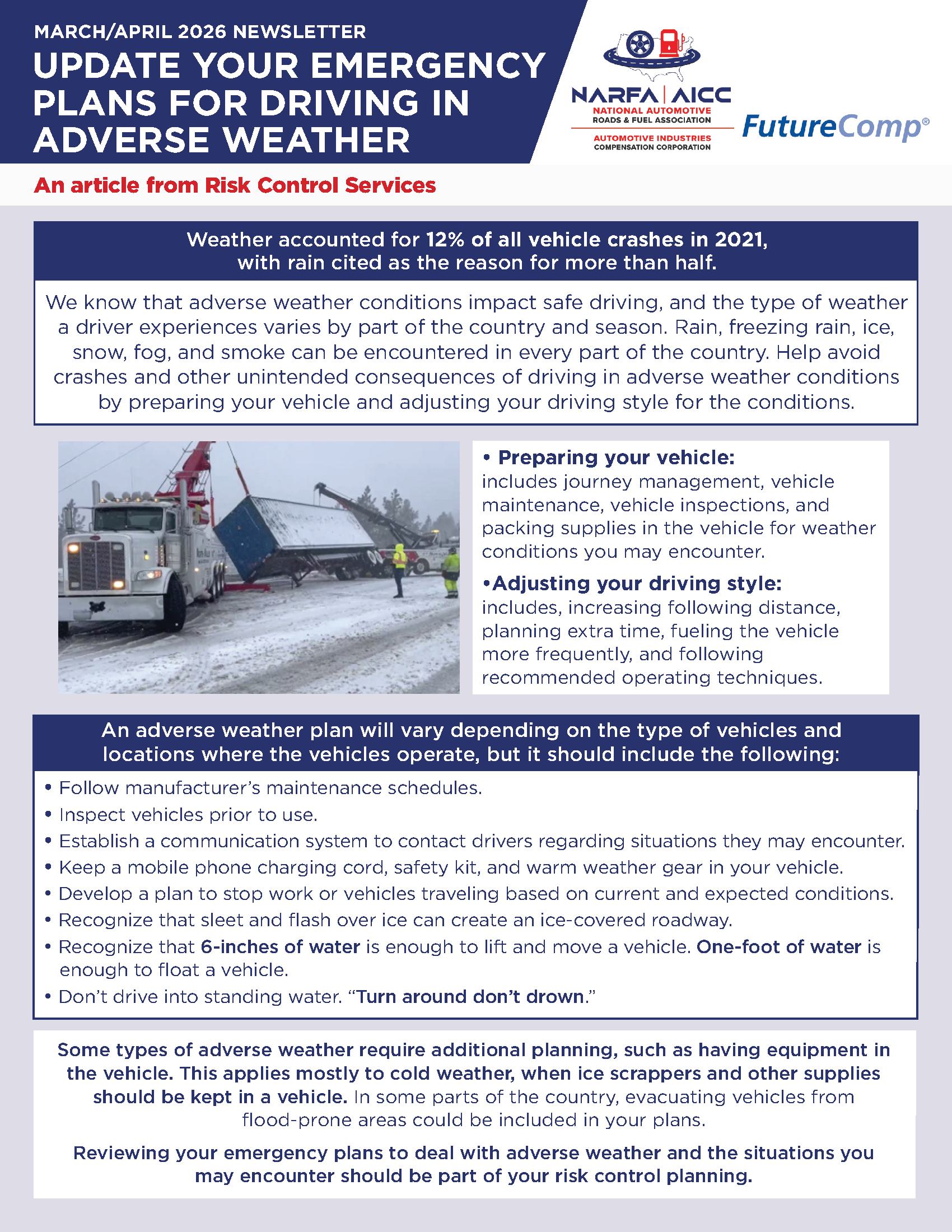
Update Your Driving Plans in Adverse Weather (PDF)
Recent Posts

Why Your Best Benefit Plan is the One Your Team Actually Uses
The goal of any benefits package is to provide security and value. Yet, in many businesses, employees feel more confused than supported. When your team [...]

April Is Distracted Driving Awareness Month: What NARFA Members Need to Know
If you spend any time on the road, you’ve seen it: the light turns green, the car in front doesn’t move, and the driver is [...]

The AICC Claims Approach for Our Members: Faster Response, Better Control, Stronger Outcomes
In the automotive, roads, fuel, or fleet industries, a workers’ compensation claim can affect more than one employee. It can disrupt production, strain supervisors, pull [...]