
Why OSHA’s Top 10 List Matters
Every year OSHA publishes the standards it cites most often, and the list barely moves. For employers, that predictability is an advantage. The hazards pulling the most citations are known, repeatable, and fixable long before an inspector walks in or someone gets hurt. Here is the current top ten and what each one means for the crews and facilities our members run.
1. Fall protection tops the list, as it does almost every year.
Any surface with a fall risk over six feet needs guardrails, safety nets, or a personal fall arrest system, whether that is a roof, a scaffold, a mezzanine, or the open edge of an excavation. The goal is protecting workers from both falling and being struck by falling objects.
2. Hazard communication comes next.
Keep a running inventory of every chemical on site, from solvents and adhesives to fuels, fertilizers, and cleaners, and confirm each container carries its hazard statement. Your safety data sheets should match what is actually on the shelf, not what was there two years ago.
3. Ladders are third, and the fixes are simple.
Rungs should be intact, clean, and free of debris. Train crews to keep three points of contact, set the proper angle and footing, and grab the right ladder for the job instead of the closest one.
4. Control of hazardous energy, better known as lockout/tagout, protects anyone servicing powered equipment.
Stored energy can release without warning during maintenance or repair. Written procedures and the correct isolation devices are what stand between a routine service call and an electrocution, amputation, or crush injury.
5. Respiratory protection matters wherever dust, fumes, and vapors show up.
Which covers a lot of ground across our trades. When ventilation or substituting a safer material is not enough, workers need the right respirator for the exposure, along with fit testing and training on how to use it.
6. Scaffolding follows its own rulebook.
Build to the design specs and load limits, apply the 3-to-1 rule for freestanding towers, and pair every scaffold with fall protection. An improvised platform or an overloaded deck is exactly the kind of shortcut that ends up in an incident report.
7. Fall protection training is a separate citation for a reason.
Owning the equipment is not the same as knowing how to use it. Workers exposed to fall hazards need to understand guardrails, harnesses, warning lines, and safety monitoring, with retraining whenever the site or the conditions change.
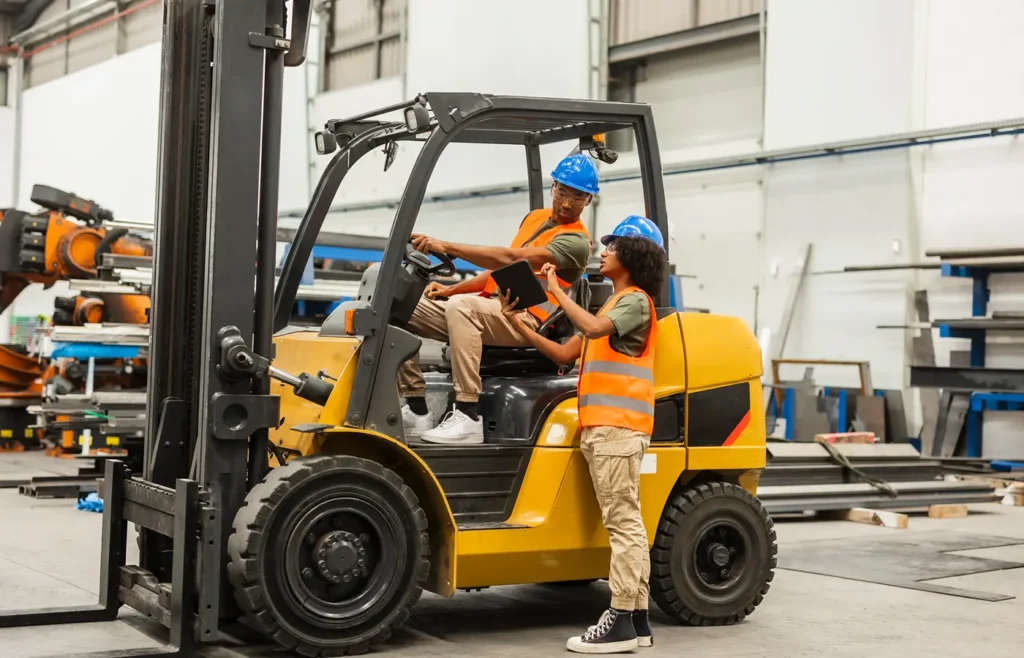
8. Powered industrial trucks, mainly forklifts, come down to training.
Cover blind spots, intersections, load limits, and load stability, and never let anyone operate one without certification. Most forklift incidents trace back to a step that was skipped, not bad luck.
9. Eye and face protection only works when it fits.
The right eyewear needs side protection where flying particles are a risk, and it has to fit the person wearing it. Cutting, grinding, mixing, and chemical handling all put eyes in the line of fire.
10. Machine guarding closes out the list.
Points of operation, nip points, and rotating parts cause serious injuries fast. Confirm guards are in place on saws, grinders, mixers, presses, and shop equipment, and that nobody has pulled one off for convenience.
The through line across all ten is that none of this is a surprise. The list looks about the same year after year, which means most of these exposures can be caught and corrected before they turn into a citation or a claim. A short walkthrough using this list as a checklist is one of the cheapest risk control steps an employer can take.
If you want help building that walkthrough into a repeatable safety routine, that is where the AICC Loss Control Team comes in. For more information about our self-insured workers’ compensation group in Massachusetts, contact us today.
Content from Carrier Chronicles was referenced in producing this post.
Recent Posts

Massachusetts PFML in 2027: What the New Contribution Structure Means for Employers
If you run a business in Massachusetts, the way your Paid Family and Medical Leave (PFML) contributions are structured changes on January 1, 2027. Here's [...]
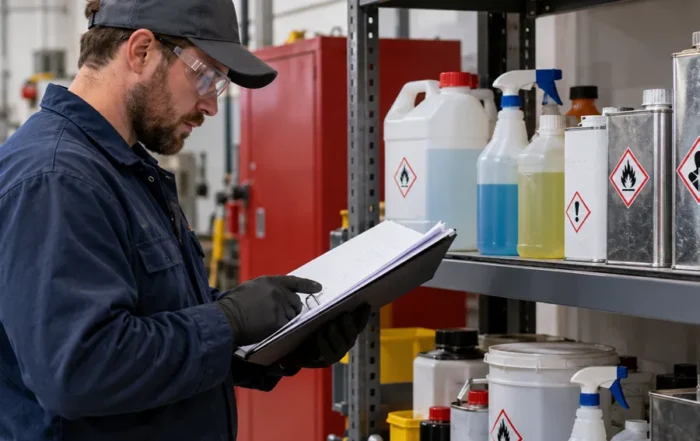
The OSHA Hazard Communication Deadline Is Coming: What It Means for Your Business
If your business keeps solvents, paints, fuels, adhesives, or cleaners on site, OSHA's Hazard Communication Standard applies to you, and it has a new deadline [...]

What the DOL’s New Mental Health Parity Enforcement Policy Means for Your Health Plan
Mental health coverage rules for group health plans shifted again this fall, and the change is worth understanding whether you already offer a plan or [...]