
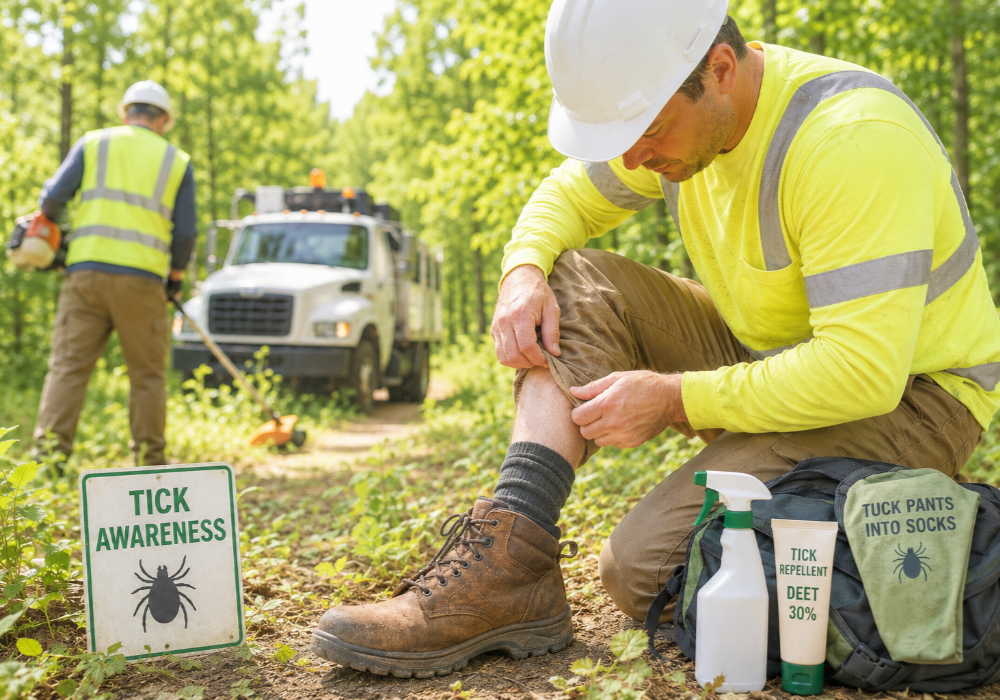
The CDC isn’t known for alarming headlines, so when the agency issued a warning in late April that emergency room visits for tick bites are at their highest level since 2017, it was worth paying attention. Compared to the same month last year, April 2026 ER visits for tick bites were up more than 25% nationally, and if you run a business in New England, that number hits closer to home than the national average suggests.
The Northeast has long been ground zero for Lyme disease, and this season is shaping up to be one of the more active ones in recent memory. In Connecticut alone, researchers are processing roughly 30 ticks per day submitted for testing, with 40% of those coming back positive for Lyme disease. A wet winter and mild early spring have created near-ideal conditions for tick activity across Massachusetts, New Hampshire, Maine, and Vermont, and the season is still ramping up. May and June are typically the most dangerous months, when the juvenile nymphal ticks emerge in large numbers and start actively seeking hosts.
For business owners in construction, landscaping, transportation, and fuel services, this is a workforce health issue that deserves more than a flyer on the break room wall.
Why Your Workforce Carries More Risk Than Most
The media coverage around Lyme disease tends to focus on hikers and weekend yard workers. The occupational exposure data tells a different story. OSHA specifically identifies construction workers, utility crews, fuel industry workers, and transportation employees among the occupations with the highest rates of tick contact on the job. A review of global studies on occupational Lyme disease found that roughly 20% of outdoor workers tested positive for the bacteria that causes the disease, a rate that has no comparison to the general population.
Ticks do not require dense forest. They thrive in brush lines, tall grass along roadsides, leaf litter in staging areas, and the unmowed edges of any commercial or industrial property. The occupations most at risk according to OSHA and the CDC include:
- Construction and roadwork crews
- Fuel delivery and utility workers
- Landscaping and grounds maintenance
- Forestry and brush clearing
- Agriculture and farm operations
- Railroad and right-of-way maintenance
Workers in the Northeast face the highest concentration of infected ticks in the country, which means this risk is a daily occupational reality for NARFA members from April through September.
The Size Problem Nobody Talks About
Nymphal ticks, the juvenile stage responsible for the majority of human Lyme infections, are about the size of a poppy seed. At roughly 1.5 millimeters, they are genuinely difficult to see on skin, they do not hurt when they attach, and they feed for days before dropping off. Most people who contract Lyme disease from a nymphal bite have no memory of being bitten at all, which is why “check for ticks” needs to mean something specific; employees need to know exactly where to look.
What Lyme Disease Actually Does to an Employee
Caught early, Lyme disease responds well to a standard two to four week course of antibiotics and most people recover fully. The problem is that early diagnosis is harder than it sounds. Only about 70% of infected people develop the well-known bullseye rash, which means a significant portion of cases present initially as fever, headache, fatigue, and joint pain. Those symptoms are easy to write off as flu, overexertion, or a minor illness before anyone thinks to connect them to a tick bite weeks earlier.
When Lyme disease goes undiagnosed or gets treated too late, the consequences become more serious:
- Inflammatory arthritis affecting the joints, particularly the knees
- Cardiac complications including irregular heart rhythm
- Neurological problems such as facial palsy, memory issues, and numbness
- Prolonged fatigue and cognitive difficulty that can persist for months
From a workforce standpoint, that progression means extended absences, restrictions on physical work, and employees who are present but not fully functional for a long stretch of time.
Lyme disease is also not the only concern. Anaplasmosis, Babesiosis, and alpha-gal syndrome, a delayed red meat allergy triggered by lone star tick bites are all on the rise in the Northeast. Research across northeastern states shows co-infection rates between Lyme and Anaplasmosis ranging from 1% to 28%, which means a single bite can involve more than one illness at the same time.
What Employers Can Do Right Now
The prevention measures are straightforward and inexpensive. Getting workers to actually follow them consistently requires deliberate effort on the employer side and one safety talk at the start of the season is not enough.
Clothing and Repellent
- Treat work clothing with permethrin before tick season begins as one treatment remains effective through multiple washings and provides significantly better protection than skin-applied repellent alone
- Use repellent containing at least 20% to 30% DEET on exposed skin
- Wear light-colored clothing so ticks are easier to spot before they find skin
- Tuck pants into socks or boots and wear long sleeves when working in brush or high grass
- Wear a hat when working near wooded edges or overgrown areas
End-of-Shift Routine
This single habit prevents more infections than almost any other measure. Employees should conduct a full-body tick check after every shift that involved outdoor exposure. The areas ticks most commonly migrate toward include:
- Behind the knees
- The groin and waistline
- Armpits and under the arms
- The hairline and scalp
- Behind the ears
- The belly button
Showering within two hours of potential exposure significantly reduces infection risk even when a tick has attached, because it removes unattached ticks and makes attached ones easier to find. Tossing work clothes in a dryer on high heat for 15 to 20 minutes before washing kills ticks that water alone does not.
If a Tick Is Found
- Remove it with fine-tipped tweezers, gripping as close to the skin as possible and pulling upward with steady, even pressure
- Do not twist, crush, or apply heat to the tick
- Photograph the tick before disposal, as that image can be genuinely useful to a physician if symptoms develop later
- Clean the bite area with rubbing alcohol or soap and water
- Watch for symptoms in the days and weeks that follow, including fever, chills, fatigue, muscle aches, and rash of any kind
Employees should feel comfortable reporting a tick bite to their supervisor and should be actively encouraged to see a healthcare provider if any symptoms develop, even without a visible rash.
Worksite Controls
- Mow grass and clear brush around break areas, staging zones, and equipment storage
- Keep materials stacked away from wooded edges and brushy borders
- Post tick awareness reminders at job site entrances during peak season, not just at the start of the year
The Benefits and Workers’ Comp Connection
NARFA members have access to health and benefits programs built specifically around the geography and requirements of our industries. Tick-borne illness is a genuine claims driver in several regions including New England, and the downstream costs: medical treatment, lost workdays, and workers’ compensation exposure when an infection is tied to the job can add up fast. Early access to care is one of the most important factors in how Lyme disease cases resolve, and health plan design matters. If you want to understand how your NARFA coverage addresses tick-related illness, or have questions about workers’ compensation exposure through AICC, contact the NARFA Benefit Center directly.
To learn more about NARFA membership, contact us here.
Recent Posts

Massachusetts PFML in 2027: What the New Contribution Structure Means for Employers
If you run a business in Massachusetts, the way your Paid Family and Medical Leave (PFML) contributions are structured changes on January 1, 2027. Here's [...]

The OSHA Hazard Communication Deadline Is Coming: What It Means for Your Business
If your business keeps solvents, paints, fuels, adhesives, or cleaners on site, OSHA's Hazard Communication Standard applies to you, and it has a new deadline [...]

What the DOL’s New Mental Health Parity Enforcement Policy Means for Your Health Plan
Mental health coverage rules for group health plans shifted again this fall, and the change is worth understanding whether you already offer a plan or [...]