
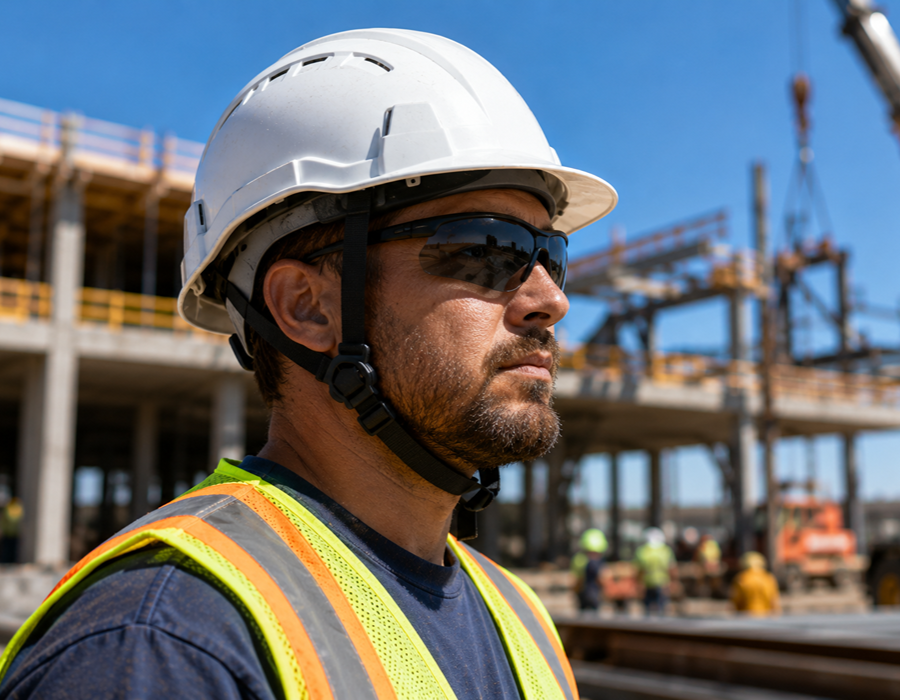
A falling object, slip from a ladder, or low steel beam nobody noticed. Head injuries happen fast and the consequences last a long time. For employers running construction crews, repair shops, fuel delivery operations, and fleets, head protection is required by law and it is one of the more consequential decisions you make about the equipment your people wear.
Handing out hard hats at orientation is all about getting head protection right, which means matching the equipment to the actual hazard, making sure it fits, and enforcing it consistently.
Why Head Protection Matters
Traumatic brain injuries represent one of the most serious injury categories in the skilled trades. NIOSH research shows construction accounts for a disproportionate share of TBI related fatalities compared with other industries. The risk is not limited to falling objects either. Falls from height, striking fixed objects, and vehicle related incidents all carry serious head injury potential.
For example, automotive repair shops, fuel delivery operations, landscape companies, and transportation facilities carry their own exposures. Workers moving through tight spaces under vehicles, around heavy equipment, or near overhead obstacles need protection matched to their specific environment, not whatever was purchased last time.
OSHA Requirements for Head Protection
Two OSHA standards govern head protection.
OSHA 1910.135(a) applies to general industry. It requires employers to ensure each affected employee wears appropriate head protection when working in areas with potential for injury from falling or flying objects or from electrical hazards.
OSHA 1926.100(a) applies to construction. It requires employees working where there is possible danger of head injury from impact, falling or flying objects, or electrical shock and burns to be protected by appropriate protective helmets.
Both standards reference the ANSI/ISEA Z89.1 consensus standard for head protection performance requirements.
Understanding Types and Classes
ANSI/ISEA Z89.1 rates head protection two ways. Type addresses impact. Class addresses electrical hazards. You need to understand both before you choose.
Type 1 reduces the force of impact from blows to the top of the head only.
Type 2 reduces the force of impact from blows to the top and the sides of the head. This is the more comprehensive option and it is becoming the standard of choice in high hazard environments.
Class G protects against low voltage electrical conductors up to 2,200 volts.
Class E protects against high voltage electrical conductors up to 20,000 volts.
Class C offers no electrical protection at all and should only be used where electrical hazards are not present.
The right combination comes from an honest look at what your workers actually face on the job, not from what has always been in the supply closet.
Hard Hats and Safety Helmets
The traditional hard hat with a brim and internal suspension has been the standard for decades. A meaningful shift is underway toward safety helmets, which use a mountaineering style design with coverage of the top and sides of the head plus an integrated chin strap.
The practical difference shows up in a fall. A traditional hard hat frequently separates from the wearer on impact, which means it is not on the head at the exact moment it is needed. A helmet with a chin strap stays put.
Many employers are revising their head protection policies to require safety helmets in any environment where a fall is possible. Employers evaluating this change should confirm any option they consider is certified to applicable ANSI/ISEA Z89.1 requirements.
Bump Caps Are Not Head Protection
Bump caps serve a narrow purpose. They protect against minor bumps, scrapes, and lacerations in environments with low clearance. They do not protect against falling objects or significant impact force.
Auto repair is a common and appropriate use case. Workers moving under vehicles face incidental contact with components, not blows from above.
Here is the line that matters. Bump caps do not meet ANSI Type 1 or Type 2 requirements. They are not appropriate for construction, for areas with overhead work, or for any environment where falling objects or real impact forces exist.
If your incident log shows a pattern of minor head bumps rather than serious impacts, bump caps may fit certain roles. If there is any risk of something falling, they are not a substitute for compliant head protection.
Fit and Maintenance
Head protection that does not fit correctly does not protect correctly. Poor fit is the most common reason workers take equipment off or avoid wearing it, so employers who address fit directly tend to see much better compliance.
Adjust the suspension properly. Maintain roughly one to one and a quarter inches between the shell and the head. That gap is what absorbs impact force. Without it, protection drops significantly.
Confirm it stays on. If it shifts or falls off when a worker bends over, it will not be there during an impact.
Inspect regularly. Look for cracks, gouges, stress discoloration, or any visible damage. Damage compromises structural integrity even when it does not look serious.
Skip the stickers. Stickers cover the shell surface and hide the cracks you are trying to find during inspection.
No ball caps underneath. Baseball caps and stocking caps interfere with the suspension fit and create additional hazard points on impact.
Clean with mild soap and water. Harsh solvents degrade the shell material over time.
Reverse wear has rules. ANSI/ISEA Z89.1 permits wearing a hard hat backward only when it is marked with a reverse donning symbol, and the suspension has to be reversed so the sizing mechanism sits at the back of the head. OSHA has confirmed this practice is acceptable when the manufacturer certifies the equipment meets applicable standards in that position.
Accessories must be compatible. Hearing and eye protection used with head protection should be designed for use with your specific equipment. Incompatible accessories affect fit and reduce protection.
Keep the literature. Manufacturer documentation supports your training program and provides storage, care, and inspection guidance you will need.
Building a Policy That Holds Up
A written policy is the foundation, and without one, compliance drifts and enforcement gets difficult.
Define exactly which areas and tasks require head protection and which type. Blanket requirements in areas where they are not needed create compliance fatigue, and gaps where they are needed create injury exposure.
Specify the type and class required for each task based on an honest hazard assessment.
Address replacement clearly. Workers need to know when to retire equipment, not just how to clean it. Any impact that could have compromised the shell, any visible damage, and manufacturer age-based replacement guidance all belong in the policy.
Bring workers into the conversation. Comfort and fit preferences vary, and workers who have input into which compliant options are available tend to wear them without being told twice.
Revisit the policy on a regular schedule so it stays aligned with the hazards your crews actually face and the equipment currently available.
The Workers’ Compensation Connection
Head injuries rank among the most expensive workers’ compensation claims. TBI-related claims carry long recovery periods, high medical costs, and a lasting impact on your experience modification factor. A single serious head injury can affect your premiums for years.
Prevention costs far less than treatment. AICC members have access to unlimited loss control services and safety resources built specifically to help employers stop these high cost claims before they happen.
Please contact us today with questions about workplace safety or our workers’ compensation program in Massachusetts.
Recent Posts

Massachusetts PFML in 2027: What the New Contribution Structure Means for Employers
If you run a business in Massachusetts, the way your Paid Family and Medical Leave (PFML) contributions are structured changes on January 1, 2027. Here's [...]
The OSHA Hazard Communication Deadline Is Coming: What It Means for Your Business
If your business keeps solvents, paints, fuels, adhesives, or cleaners on site, OSHA's Hazard Communication Standard applies to you, and it has a new deadline [...]

What the DOL’s New Mental Health Parity Enforcement Policy Means for Your Health Plan
Mental health coverage rules for group health plans shifted again this fall, and the change is worth understanding whether you already offer a plan or [...]